AIR CARE JOURNAL

THE AIR CARE JOURNAL
Learn what to do if snow or ice blocks your dryer vent, when to stop using the dryer, and how to check the outdoor exhaust safely after an Ontario snowstorm.
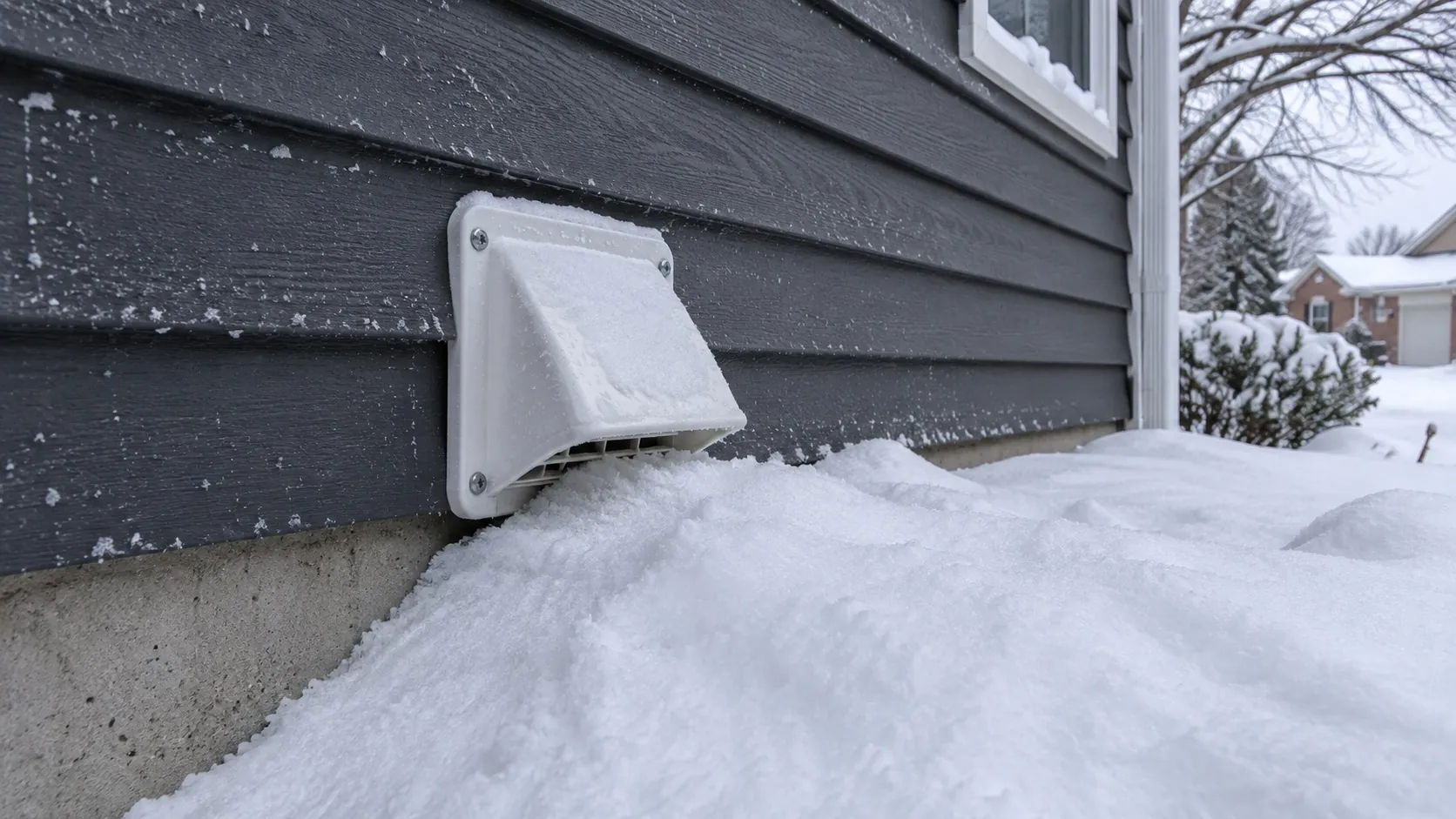
A common winter enquiry to Power Vac of Ottawa starts like this: after a snowstorm, the dryer displays “Check Vent,” or there is little or no airflow at the exterior outlet. Before trying another load, check whether snow or ice is blocking the exhaust. Stop using either a gas or electric dryer if snow or ice blocks the outlet. Do not run the dryer to try to melt the blockage.
This 2027 guide explains what Ontario homeowners can check safely after a storm, when to leave the dryer off, and when to arrange an inspection.
Look at the outdoor dryer exhaust hood before starting laundry after a storm. If it is safely reachable from firm ground, gently brush away loose snow with a soft brush. If ice has jammed the flap, the hood is damaged, or the outlet is out of reach, leave the dryer off and arrange an inspection. A clear-looking hood does not rule out a restriction farther inside the vent.
Your dryer needs an open exhaust path to release warm, moisture-laden air outdoors. Snow packed against the outlet or ice holding the flap shut can restrict that airflow. Heat and moisture can become trapped, increasing the risk of overheating and fire. An electric dryer still needs a clear exhaust, even though it does not burn gas.
A gas dryer has an additional risk: its exhaust carries combustion gases. A blocked outlet can allow carbon monoxide to build up inside the home. You cannot see or smell carbon monoxide, so do not use the absence of an odour as reassurance. Enbridge Gas’s winter vent guidance specifically includes clothes dryers among appliances whose exterior exhaust outlets must stay clear.
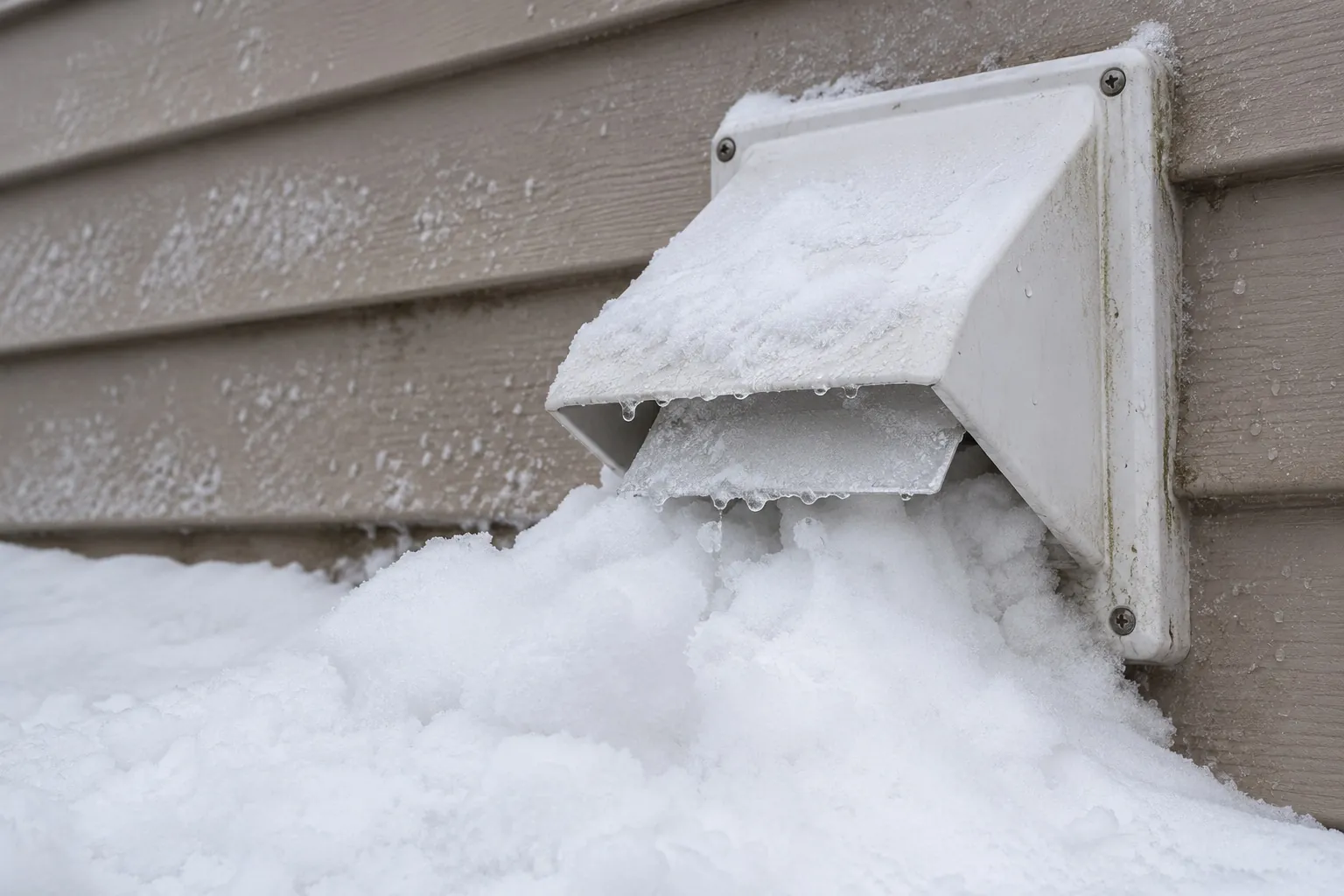
Turn the dryer off before checking the outlet. Only approach it if the ground and access route are safe. Use this short checklist after snowfall, especially when wind or snow removal has changed where snow collects:
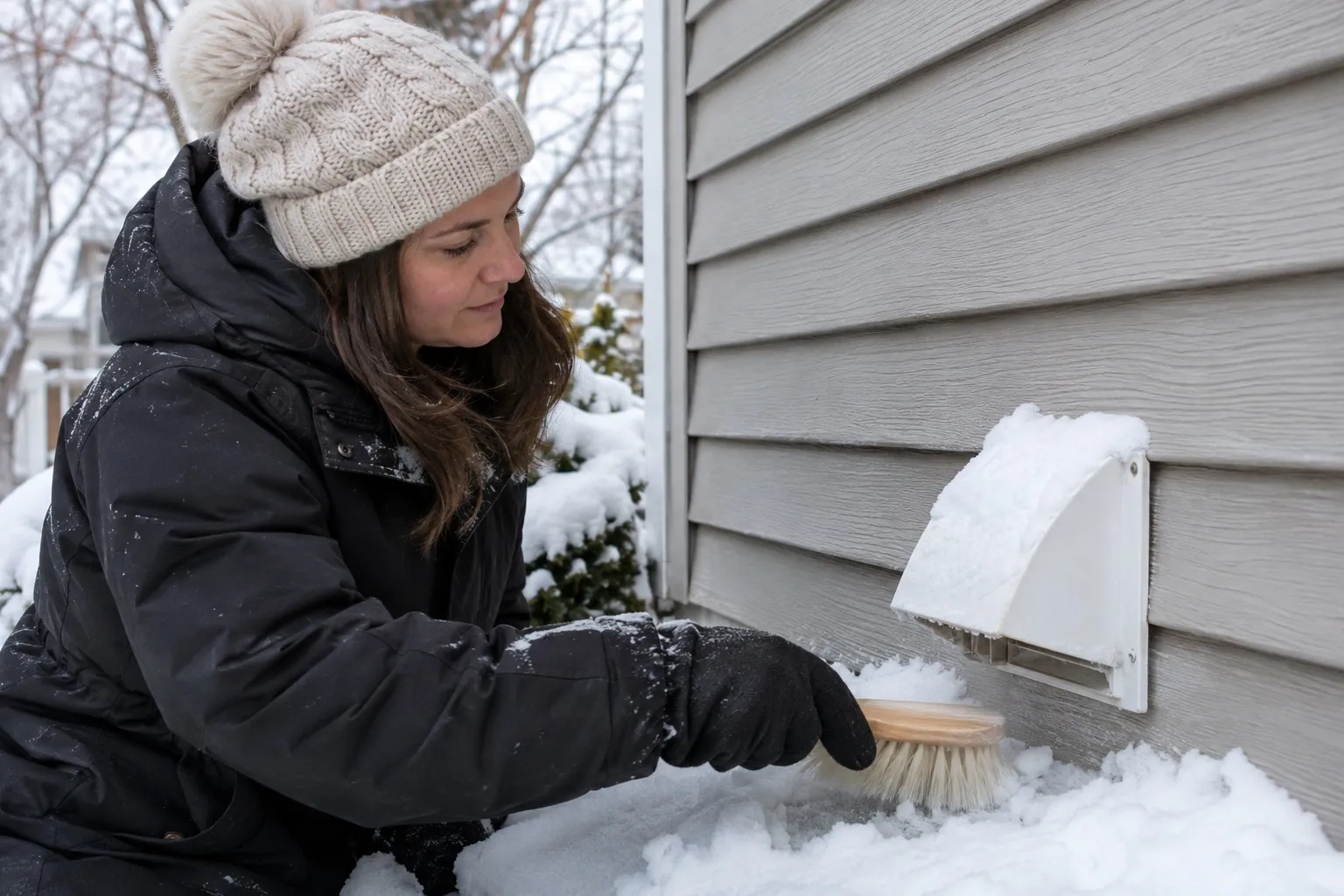
The Ontario TSSA snow and ice guidance also recommends gentle brushing and avoiding sharp tools around appliance vents. If you cannot tell whether the exhaust is clear and undamaged, keep the dryer off until it can be checked.
Snow is only one possible restriction. Lint inside the exhaust run, a crushed connector behind the dryer, or a routing issue such as excessive bends can reduce airflow even when the outdoor hood looks clear. A newer dryer connected to an existing exhaust run can still display “Check Vent”: replacing the appliance does not remove a blockage or correct the vent route.
Do not repeatedly restart the dryer to dismiss the warning. Leave it off, consult the model’s instructions and arrange an inspection of the exhaust path. Tell the technician when the warning began, whether it followed a storm or a dryer replacement, and where the outlet is located. Cleaning may address lint, while a damaged connector or routing problem may need a separate correction.
For condos and upper-storey outlets, check with building management about who is responsible for the vent and how safe access will be arranged. Do not lean out of a window or climb an icy ladder to reach it.
Before doing laundry after an Ontario snowstorm, check the outside hood, gently clear safely reachable loose snow, and look again after drifting or refreezing. Keep the dryer off if the outlet is blocked, the flap is frozen, the hood is damaged or the warning continues.
Power Vac of Ottawa can help with dryer vent cleaning. Request a free quote and describe the blockage, warning and access conditions so our team can discuss the next step. For broader seasonal maintenance, read Preparing Your Home for Winter: Why Duct Cleaning Is Essential.
No. Stop using it until the blockage is resolved and the exhaust can operate properly. An electric dryer still needs airflow to release heat and moisture; a blocked outlet can cause overheating and increase fire risk.
Leave the dryer off. You can gently brush away loose snow if the hood is safely reachable, but do not force an iced flap, scrape it with sharp tools or run the dryer to thaw it. Arrange an inspection if the flap remains frozen or the hood is damaged.
A new dryer may be connected to an existing exhaust run with lint, a crushed connector or a routing problem. The warning can indicate restricted airflow beyond the appliance. Keep the dryer off while you consult its instructions and arrange an exhaust inspection.
Everyone must leave immediately and call 911 from outside. Do not stay inside to check the dryer or find the source. Do not go back inside until emergency responders say it is safe. See Toronto Fire’s guidance for sounding alarms.
Need help with a dryer exhaust concern? Tell Power Vac of Ottawa about the warning, the outlet location and any snow or ice you can see. Our team can discuss dryer vent cleaning and inspection needs with you.
Ottawa, Ontario, Canada
Phone:
(613) 733-2364Email:
info@powervacofottawa.caLET’S CLEAR THE AIR